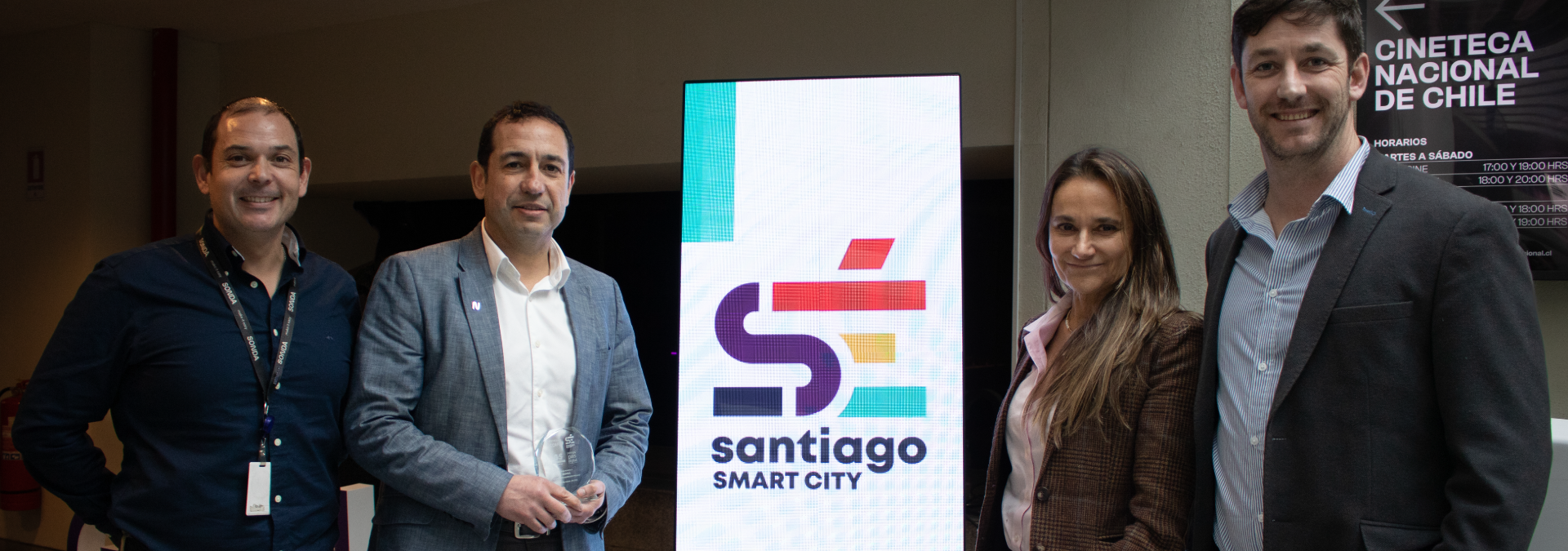
The Smart City Awards event in its fifth edition seeks to recognize those actors from the public, private, academic, and civil society sectors who, through the development of innovative initiatives, have contributed to the prevention and solution of urban problems, advancing towards a smarter, more friendly, inclusive, and sustainable Santiago.
SONDA won the "Private Leadership" award, recognizing private sector actors who have transformed Santiago into an intelligent city. We achieved these results through our "Protected Neighborhood" project implemented in Las Condes, Chile.
It involves installing cameras in public spaces equipped with analytical software and artificial intelligence. These cameras can detect abnormal behavior or suspicious situations, and alert the Las Condes Security Communications Center. Emergencies or procedures may require attention or response teams. They may include citizen security, police, emergency personnel, firefighters, etc.
Today the project has more than 2,400 surveillance cameras, of which approximately 68 allow license plate recognition, as well as more than 170 intelligent posts distributed throughout the commune, allowing citizens to communicate with the security center. In addition, more than 60 safe shelters are equipped with video surveillance and located at bus stops.
At SONDA, we remain committed to finding cutting-edge solutions that positively impact society and enhance people's lives. We are grateful for this significant recognition and to our partners, VSaas.ai, WebPCX, Hikvision, Lenovo, and Dell. Only through their collaboration, we contribute to our neighboring communities' security.
Latest news
Investors
News
SONDA raises its net income to US$11 million in the first half of 2026, US$7.4 million higher than the same period of the previous year
The increase is largely explained by better operating income and revenue from the sale of subsidiaries and non-strategic real estate assets, which represent net income after taxes of US$4.6 million.
Smart Cities Connect
Technology
Automated Fare Collection Systems: A Guide for IT and Procurement Teams
A technical overview of automated fare collection systems — how AFC architecture works, which payment technologies are in use, and what US transit agencies need to know before modernizing.
Digital Services
Service Desk
What Is a Modern Digital Service Desk? How Leading Enterprises Are Redefining IT Support (2026)
Enterprises operate in more complex digital environments. Hybrid work, distributed operations, and an increasing reliance on digital services have placed unprecedented pressure on IT teams, who struggle to handle today’s scale, speed, and expectations.